
Why Do Sour Lemons Make Us Pucker?
Translators: 时光, 东达, JJ
Proofreader: 毫秒
Reviewer: 毫秒
So Sour!
Before we begin, imagine a little game: someone gives you a lemon. Cut it open, then eat it without changing your expression.
Could you do it? If not, that is exactly the point. (If you could, just pretend you could not!) The question we want to explore is why a lemon’s sourness has the power to twist your face into such a dramatic grimace.

Scientists are not entirely sure, but they think the answer involves three things: hydrogen ions, vitamin C, and our ancestors’ experience of feasting on tropical fruit up in the trees.
The taste we call “sour” is directly connected to acidity. In chemical terms, sourness is your taste buds saying, “There are a lot of hydrogen ions dancing around in your mouth right now.” It would not be accurate to say that hydrogen ions are themselves acids, but research suggests that our bodies evolved to interpret their presence as a sour taste.
To survive, humans need ascorbic acid, or vitamin C. It is essential for the normal function of most of our cells and tissues. Too little vitamin C causes scurvy, a potentially fatal disease. Early European sailors, notably, ate no vegetables during long voyages. The resulting lack of the vitamin C found in vegetables allowed scurvy to spread through their ships.
Here is the awkward part: most organisms can make the vitamin C they need, but humans cannot. A study published in Genetica in 2011 reported that a mutation arose about 61 million years ago in the section of mammalian DNA that encodes vitamin C synthesis. Because our ancestors already had easy access to vitamin C, this mutation did not cause natural selection to eliminate them.
“We lost the ability to make our own vitamin C because we were eating it all the time,” Paul Breslin, a professor at the Department of Nutritional Sciences at Rutgers University in New Jersey, told Live Science.
Breslin, a sensory biologist at the Monell Chemical Senses Center in Philadelphia, added, “We eat plenty of fruit in daily life, so we are unlikely to become deficient in vitamin C.”
Words such as “acidic” and “sour” often have negative connotations. In modern society, however, people seem to enjoy sour flavors in the right setting. Apples and oranges, for example, strike a pleasing balance between sweet and sour. That balance reflects our ancestors’ ordinary diet and helps us obtain vitamin C. Sourness can also signal fermentation, which has accompanied humans throughout our evolutionary history.
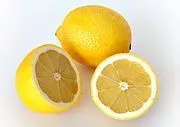
If sour foods and flavors can be good for us, why does eating a lemon still make us pucker involuntarily?
“Wrinkling up your face is some kind of a rejection response,” Breslin said, “or a signaling response to ourselves and others”—this is far too sour.
Scientists can make an educated guess about where the signal came from, but they still cannot be certain.
“Most of the fruit we eat is not very sour, because people are reluctant to eat extremely sour lemons or limes.”
Although most people avoid highly sour foods, those who enjoy them have one advantage: they are unlikely to get scurvy. Fruits with strong acidity are rich in vitamin C, which effectively treats scurvy. —Translator’s note
References
Live Science:https://www.livescience.com/65869-why-sour-face.html
 爱发电(点击图片跳转)