Fundamentals of Editing and Publishing
Author: Shiguang
Reviewed by: Mei Shida
Publishing and Editing
Publishing, or more fully “publishing activity,” is the professional practice of selecting, editing, reproducing, and distributing works to the public. It encompasses the many steps that take a work from raw manuscript to finished publication, with the goal of bringing worthwhile information to readers.
In Chinese, the word for editing can refer both to the process of organizing and refining source material or an existing work and to the professional who does that work, such as a book editor at a publishing house. Editors organize, record, collect, arrange, compile, and review intellectual works and other documents before presenting them to the public. Editing is an essential part of publishing and must happen before a publication can be reproduced and distributed. Its primary purpose is to shape a work’s intellectual and cultural content through planning, organization, review, selection, and revision.
An Editor’s Responsibilities
An editor’s responsibilities fall mainly into three areas:
- Protecting basic quality (setting the floor)
This is the foundation of editorial work. An editor must read a manuscript rigorously, looking for errors, omissions, and passages that do not make sense. The editor ensures that the book meets political, ideological, scientific, and factual standards, catches basic mistakes, and gives readers accurate, reliable information. - Making the book better (raising the ceiling)
Beyond protecting basic quality, an editor should use professional judgment to develop and refine the work. Improving the structure, polishing the prose, and strengthening the logic can make a book more engaging and readable, help the author express ideas more clearly, and increase the book’s overall quality, value, and market appeal. - Ensuring timely publication
Without sacrificing quality, an editor must manage the schedule so that the book can be published and distributed on time. This requires strong time-management and coordination skills, along with close cooperation with the author, typesetters, printer, and everyone else involved. Editors must keep their own work from delaying production while meeting the expectations of readers and the market.
The Publishing Process
Publishing a book generally involves the following stages:
Title planning --> Three-stage review --> Manuscript editing --> Handoff for typesetting --> Three rounds of proofreading and a final read-through --> ISBN application --> Quality inspection and print authorization --> Marketing and distribution --> Reprints and new editions
Title planning
This is where book publishing begins. It includes gathering information, developing a concept, submitting a project proposal, and commissioning a manuscript. Editors research market demand, industry trends, and reader preferences through multiple channels, then combine that knowledge with the publishing house’s focus and strategy to plan a title with both market potential and cultural value. They also work with the author to establish writing requirements and a publication schedule, laying the groundwork for the editorial work ahead.Three-stage review
The responsible editor conducts the initial review, reading the entire manuscript to determine whether it fulfills the project brief and assessing its content, structure, language, and other fundamentals. A deputy head of the editorial department generally conducts the second review. Building on the first, this stage examines the manuscript more deeply, with particular attention to political, ideological, and academic issues, and determines whether it has sufficient value for publication. Senior leaders such as the editor-in-chief or publishing-house president conduct the final review, evaluating the manuscript as a whole and deciding whether it will be published.Editorial processing
After the manuscript passes all three reviews, the editor develops and carries out a detailed editing plan. This stage calls for careful revision: standardizing the language, adjusting the structure, filling gaps in the content, and bringing the manuscript up to publication standard.Handoff for typesetting
Once editing is complete, the manuscript moves into typesetting. The editor works with the typesetter to determine the page design, including the typeface, type size, and line spacing, and makes sure the layout suits the book’s style and is comfortable to read. The editor then hands off the prepared manuscript, reviews the resulting proofs, and promptly corrects any problems introduced during typesetting.Three rounds of proofreading and a final read-through
The first round chiefly checks the typesetting, text, and punctuation. The second pays closer attention to continuity, logic, and structure. The third is an even more detailed check intended to ensure that every outstanding problem has been resolved. Afterward, the entire book receives one final read-through to confirm that it meets publication standards.ISBN application
An ISBN is a book’s unique identifier. The editor must apply for one through the national press and publication authority and prepare the necessary copyright materials, including author information and a summary of the book. This step is essential for lawful publication and sale.Quality inspection / print authorization
Before printing, the typeset book undergoes a quality inspection covering the cover, body text, and other components. The formal print order can be issued only after the inspection confirms that the files are ready and the finished product will meet the relevant quality standards.Sales and marketing
After publication, the editor works with marketing staff to develop a sales and promotion strategy. This may include book fairs, publicity events, social media, and other channels that can build awareness and sales.Reprinting / new editions
Based on sales and market demand, the editor decides whether to reprint the book or prepare a new edition. If readers respond well and demand remains strong, the editor consults with the author and makes the necessary arrangements.
What Parts Make Up a Book?
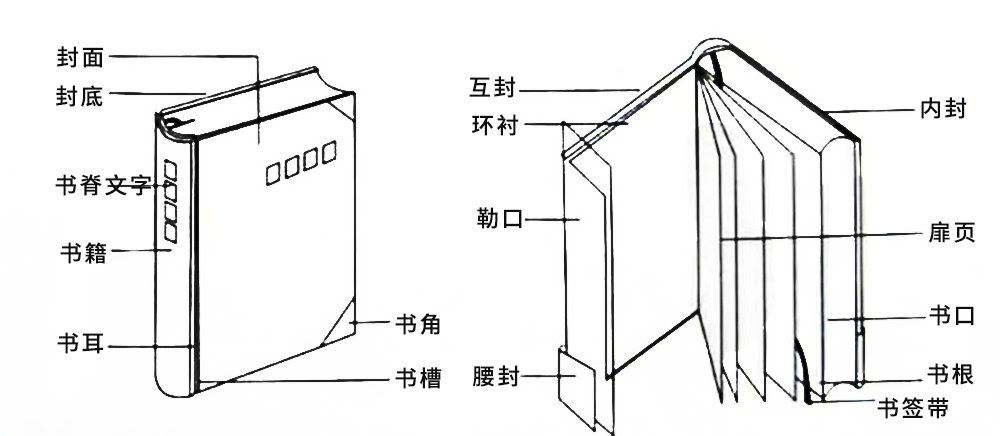
A finished book consists of several exterior and interior components. The exterior includes Cover 1 (front cover), Cover 4 (back cover), the spine, Cover 2 (inside front cover), Cover 3 (inside back cover), the dust jacket, belly band, and cover flaps. Inside are the title page (inner cover), copyright or edition-record page, preface and foreword, table of contents, and main text.
- External components
- Cover 1 (front cover) is the book’s outer face. It generally carries the title, author’s name, publisher, and other information; it both attracts readers and protects the book;
- Cover 4 (back cover) generally carries a synopsis, author biography, publication information, barcode, and similar material;
- The spine carries the title, author’s name, and publisher’s name so readers can find the book on a shelf;
- Cover 2 (inside front cover) and Cover 3 (inside back cover) are generally white, although they may carry information related to the book;
- A dust jacket wraps around the front and back covers and protects them;
- A belly band is a strip of paper wrapped around the middle of a book. It usually carries promotional copy or content highlights intended to catch a reader’s attention;
- A flap is the portion of the front or back cover folded inward along the fore edge. It may carry an author photograph, biography, or similar information.
- Internal components
- The title page (book-title page/inner cover) follows the front cover and generally carries the title, author information, publisher, and publication date. It marks the formal beginning of the book;
- The copyright page (edition-record page) follows the title page and records the book’s publication details, including its ISBN, edition, and impression;
- The preface and foreword appear before the main text and discuss the book or its author. Usually written by a scholar, specialist, or the author, they provide background and guidance for readers;
- The table of contents outlines the book, listing chapter titles and page numbers so readers can scan it and find material quickly;
- The main text is the heart of the book, containing the author’s principal material, ideas, and arguments.
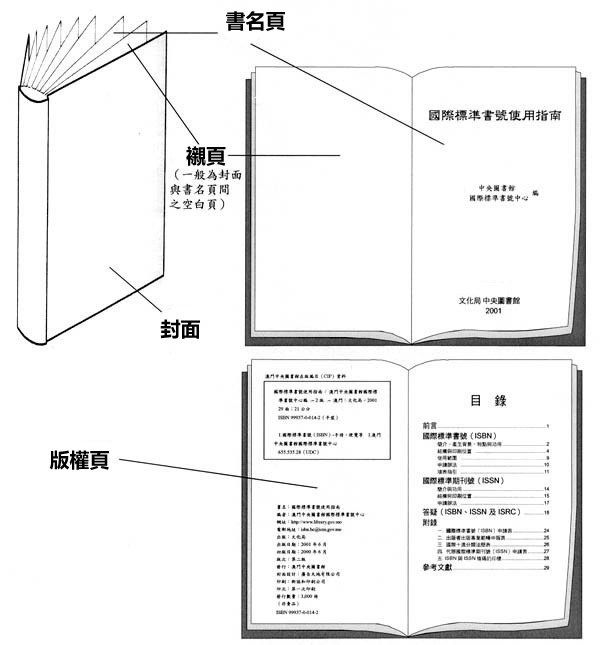
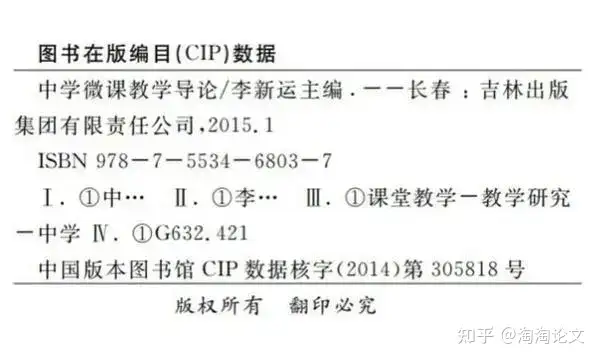
Other relevant concepts include CIP data, editions and impressions, and barcodes. CIP, or Cataloging in Publication, is the bibliographic data prepared for a book before publication and filed with the national press and publication authority. An edition identifies a version of a book, while an impression counts how many times that version has been printed. A barcode is a pattern of black bars and white spaces used in book management and sales. Publications in China currently use two categories: the Chinese Standard Book Number barcode, which includes barcodes for books, electronic publications, and audiovisual products, and the Chinese Standard Serial Number barcode.
- An edition identifies a version of a book. The initial publication is called the “first edition” or “original edition.” A substantially revised work that is typeset and published again becomes the “second edition.” Another revision and republication produces the “third edition,” and so on. Changing only the cover or making a few corrections does not create a new edition; it changes only the impression.
- An impression counts successive printings of the same book. Beginning with the first printing of the first edition, each reprint is numbered cumulatively on the edition-record page. If the first edition was printed three times, the first printing after a revision should be recorded as the fourth printing of the second edition.
Page Design and Typesetting
Designing and typesetting a book is a complex, exacting process. It involves full sheets and book formats, printed sheets and page counts, the overall design, page layout and type area, running heads and page numbers, leaves and pages, head and foot margins, part-title pages, binding edges, and trim edges.
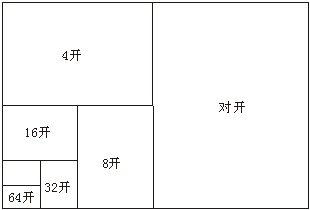
Let us begin with the full sheet and book format. A full sheet is a flat piece of printing paper manufactured to specified dimensions. Common sizes include 787 mm × 1092 mm, 880 mm × 1230 mm, and 850 mm × 1168 mm. In publishing, “format” describes the finished page size of a book or periodical and indicates how many leaves are cut from a full sheet. A book may be described as 16mo or 8mo, for example. Common formats include 8mo, 16mo, 32mo, and 64mo, each available in portrait and landscape orientations; the illustration above shows their relative sizes. Different formats suit different kinds of books. The 16mo format is often used for academic works and magazines, while 32mo is more common for novels and general-interest books.
If those sizes still seem abstract, think back to buying protective book covers in elementary school. The larger ones made for workbooks fit 16mo books, while the smaller ones made for textbooks and notebooks fit 32mo.
With book formats in mind, we can turn to printed sheets and page count. A printed sheet is a unit for measuring the length of a publication. Printing one side of a full sheet counts as one printed sheet; printing both sides counts as two. The number of printed sheets is closely tied to format and pagination. In a 32mo book, one printed sheet corresponds to 32 numbered pages; in a 64mo book, it corresponds to 64.
In publishing terminology, one leaf has two pages, with consecutive page numbers on its two sides: an odd number on the recto and an even number on the verso. Before looking at the elements within a page, we need to distinguish three concepts: typographic design, page layout, and type area.
- Typographic design means the complete typesetting scheme for a book or periodical. It covers the arrangement, typeface, and type size of the main text, headings, figures, tables, running heads, notes, and page numbers; the dimensions of the type area, including lines per page, characters per line, and line spacing; the punctuation style; and the use of heading illustrations, tailpieces, fillers, and other elements.
- Page layout is the overall arrangement of content on each page of a publication, including text, figures, tables, and the surrounding blank space.
- The type area is the portion of a page occupied by text, figures, and tables, excluding the surrounding margins. Thoughtful decisions about typographic design, page layout, and type area make a book more attractive, readable, and comfortable to use.
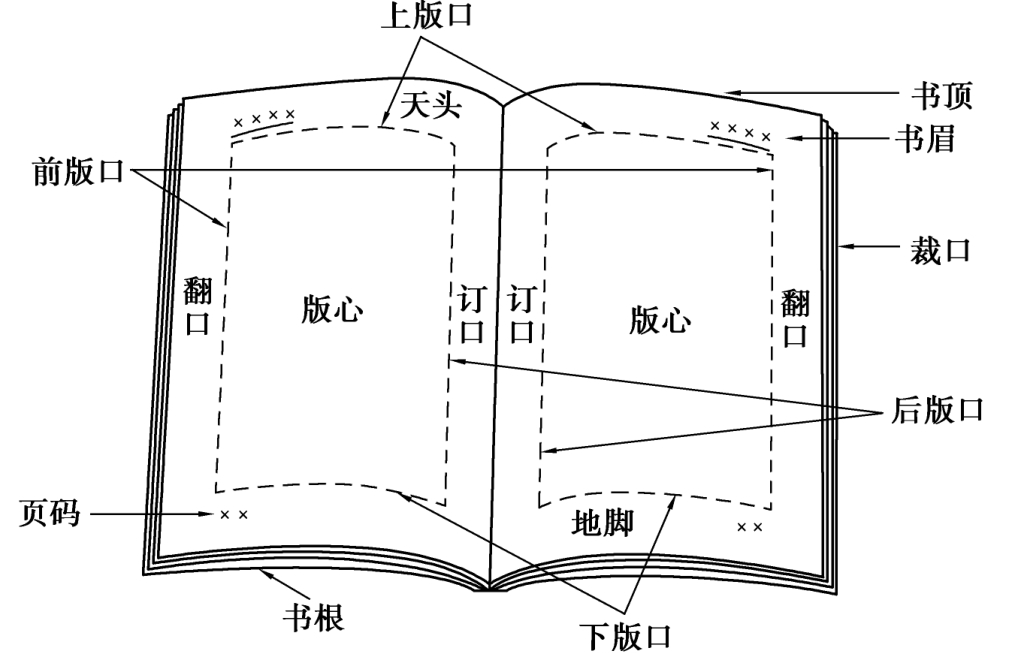
As the illustration shows, a page includes not only the type area but also the running head, page number, head margin, and foot margin.
- A running head is a line of text printed above the type area to help readers navigate the book. It generally contains the title of a part, chapter, or section, along with the page number. The running head on an odd-numbered right-hand page is usually lower in the hierarchy than the one on an even-numbered left-hand page. For example, the left-hand page may carry the book title, while the right-hand page carries the chapter title.
- A page number can appear by itself below the type area, in the foot margin, or above the type area, in the running-head position. In a conventionally bound left-to-right book, odd-numbered pages appear on the right and even-numbered pages on the left.
- The head and foot margins are the blank spaces above and below the type area, respectively. The head margin is generally larger. These spaces improve the appearance of the page, leave room for binding, and give readers space for notes.
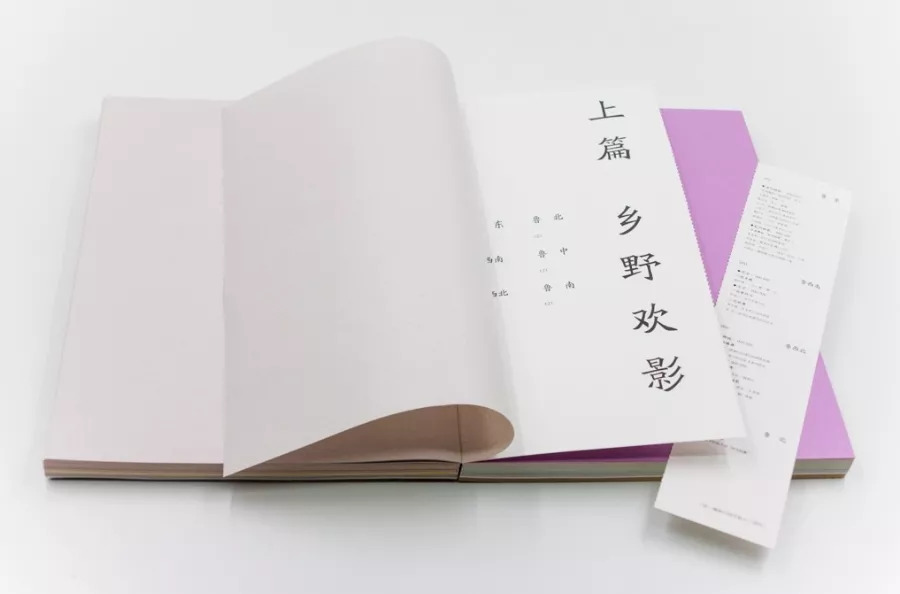
In addition to the main text, a book may contain part-title or chapter-opening pages. A part-title page is a single page placed at the beginning of a major division, such as a part or chapter, and carries its title. The reverse is usually blank. These pages clarify the book’s organization and help readers find their way through it, so they require their own design.
Printing and Binding
Once the page design and typesetting are complete, the book can enter the printing and binding stage.
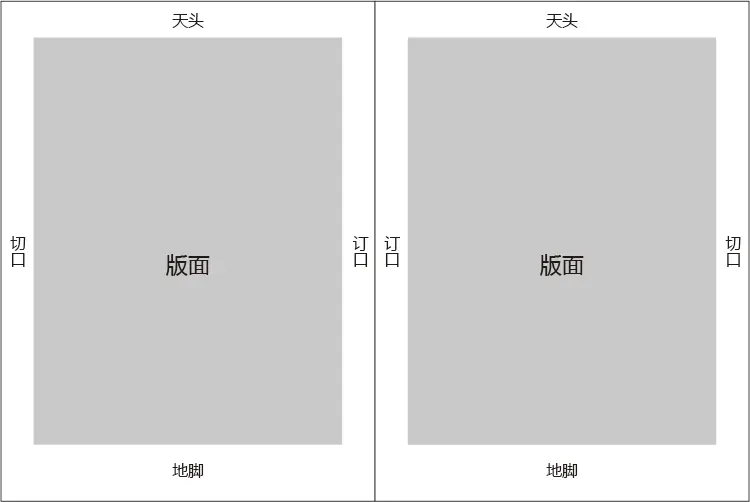
To either side of the type area are the binding edge and trim edge. The binding edge is the side on which the book or periodical is bound, whether by perfect binding or another method. The other three sides are trimmed smooth and known as the head, tail, and fore edge. Page numbers are generally placed toward the trim edge so readers can find them easily while flipping through the book.
Printing a book begins with choosing the paper. Papers are generally classified by type and basis weight in grams per square meter. Common choices include:
- Coated paper
- 250g is generally used for major perfect-bound books of more than 10 printed sheets
- 200g is generally used for perfect-bound books of 7–10 printed sheets
- 157g is used for flapped covers / saddle-stitched books of fewer than 7 printed sheets, with lamination
- 128g is used for flapped covers / saddle-stitched books.
- Offset paper for the body text: 58g, 60g, 70g, or 80g.
- Kraft paper for covers: generally used for examination-paper covers.
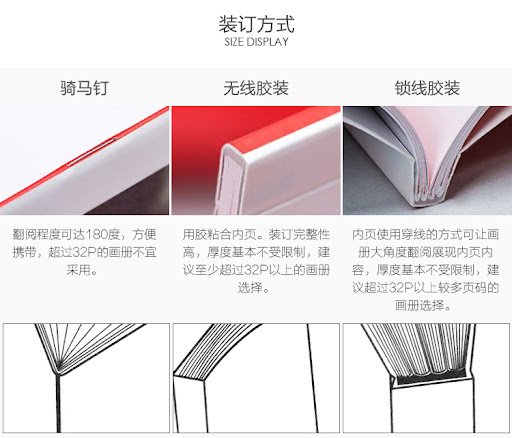
After choosing the paper, we need to select a binding. Common methods include saddle stitching, which fastens booklets of fewer than 100 pages with staples; perfect binding, which uses glue that may crack with age; exposed-spine sewn binding, in which visible rows of thread join small gatherings of paper and allow even a thick book to lie flat; and hardcover binding, a more complex process that produces an attractive, durable book.
We must also decide how the book will be printed. Color options include four-color CMYK printing: cyan, magenta, yellow, and black. A book may use black only; two colors or spot colors, requiring two passes through the press; or all four colors, requiring four passes at a considerably higher cost.
At this point, the book is ready for publication, but several finishing processes can add a final polish:
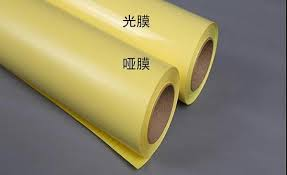
- Lamination: a plastic film is applied to the printed surface to protect the book. Adhesive, heat, and pressure bond the film to the paper, creating a paper-and-plastic composite. The two standard finishes are gloss and matte, although newer options such as soft-touch film have appeared in recent years. Gloss film creates a bright, vivid surface, while matte film reduces reflections and gives the product a more understated appearance.
Paper lighter than 128g is unsuitable for lamination, which is generally reserved for paper heavier than 200g.
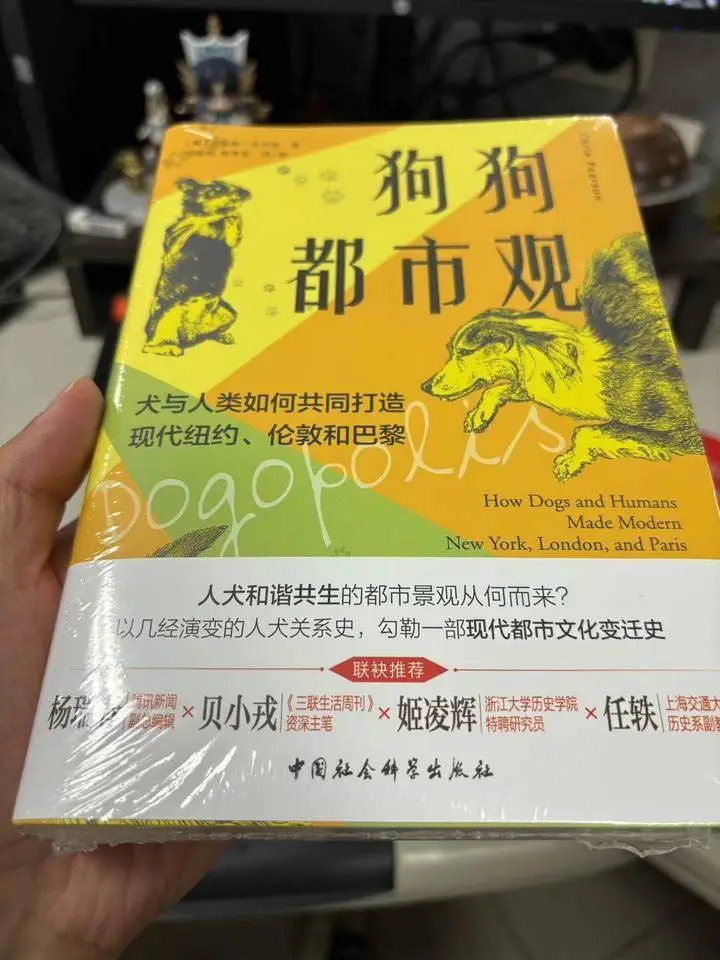
- Shrink-wrapping: packaging equipment encloses the book in plastic film, which then contracts under heat to form a protective seal.
- Varnish and UV: varnish is a liquid coating applied to printed material to add gloss, wear resistance, and water resistance. Water-based varnish, favored for its environmental performance, is commonly used in China. UV inks cure under ultraviolet light and can create a variety of effects on a printed surface. Spot UV is usually applied after lamination.
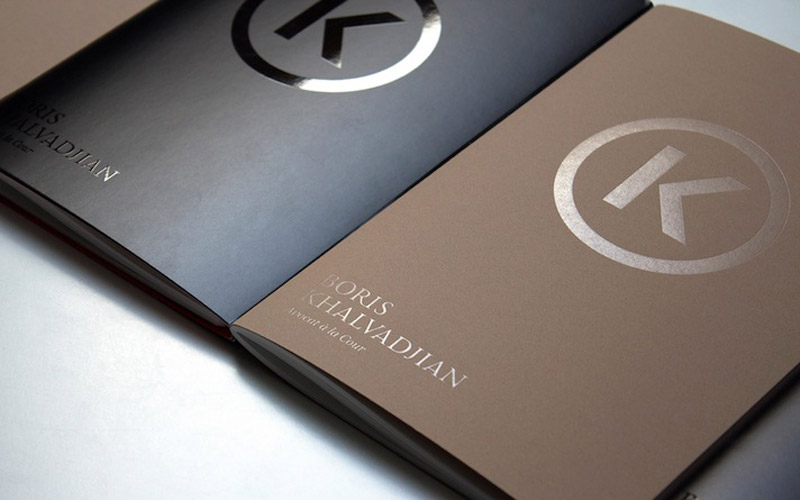
Many other printing processes are available, including foil stamping, gravure, and letterpress, but a detailed discussion is beyond the scope of this article.
 爱发电(点击图片跳转)