Why You Can't Solve a Rubik's Cube with One Twisted Corner
Author: phy东西
Reviewed by: A Millisecond of Eternity
When many people first learn to solve a 3×3 Rubik’s Cube, they reach the top layer, run into a case they do not know how to handle, and twist a few corner pieces into place by hand. But if we accidentally twist a single corner, the top layer may take on a configuration we have never seen before. This raises a question: why does twisting one corner make the cube impossible to solve?
To answer it, we first need to define a quantity for the cube: corner orientation.
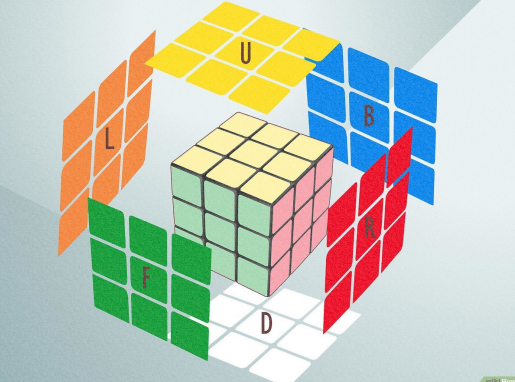
Most solvers begin with white on the bottom, and the standard color scheme places yellow opposite white. We will therefore use the following convention. With the yellow and white centers facing up and down respectively, a corner is correctly oriented if its yellow—or white—sticker faces up—or down—and we assign it the value 0. If a corner must be twisted clockwise to reach the correct orientation, we assign its current state the value 1. Symmetrically, if it must be twisted counterclockwise to reach the correct orientation, we assign it the value -1.
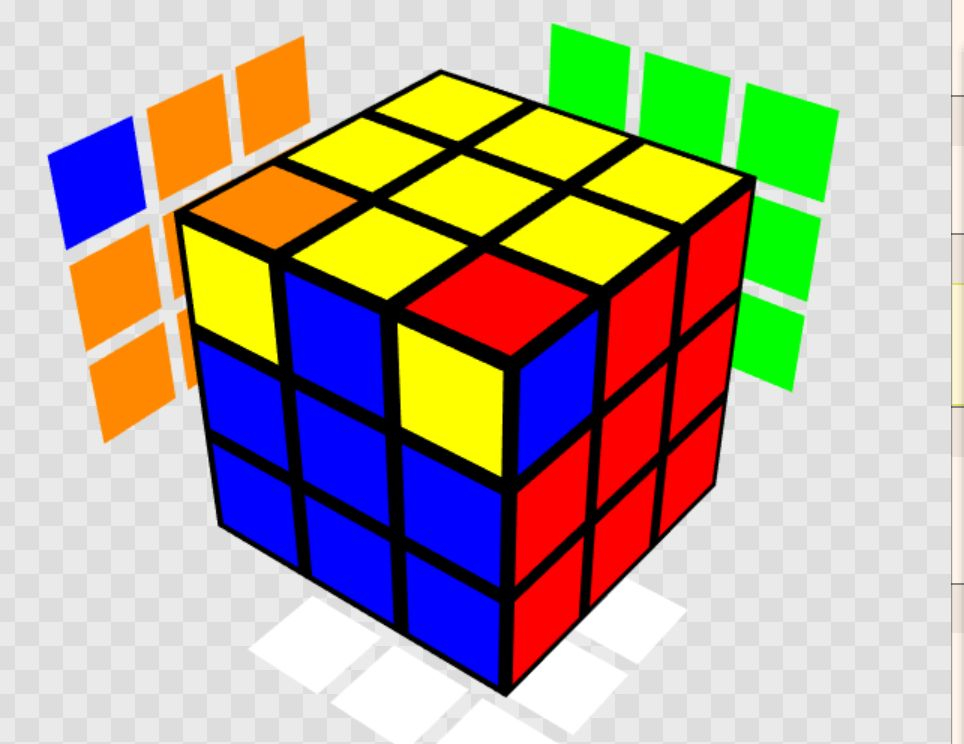
Now take a solved 3×3 cube and put yellow on top. Under the convention above, the orientation values of all its corners add up to 0. Turn any face—for example, rotate the face toward us clockwise. The orientation values of the four front corners become 1, -1, 1, and -1 in sequence, while the four rear corners remain at 0. The cube’s total orientation value is still 0. Similar reasoning leads to the following conclusion: starting from a solved 3×3 cube, the sum of the corner orientations in any state reached using only face turns is always an integer multiple of 3. Twisting just one corner breaks this invariant: the sum of the corner orientations is no longer a multiple of 3. The cube therefore cannot be restored using face turns.
A Rubik’s Cube holds many more surprises. For example, a cube assembled at random has only a 1/12 chance of being solvable; some positions can be solved using only R and U moves, while others cannot. You can uncover much more by exploring these questions yourself.
 爱发电(点击图片跳转)