A Brief History of Humankind: The Sapiens Flood (Part I)
Author: Zikongli
Today, meet the world’s deadliest animal—No. 1: Homo sapiens. Around 150,000 years ago—or 200,000 years ago, according to some accounts—Homo sapiens began the Cognitive Revolution. They then expanded rapidly from the African grasslands across Eurasia, wiping out most of their fellow species in the genus Homo along the way. Some of those populations’ DNA did manage to hitch a ride on the fast-moving Homo sapiens express. People across Eurasia today generally carry a small amount of Neanderthal DNA.
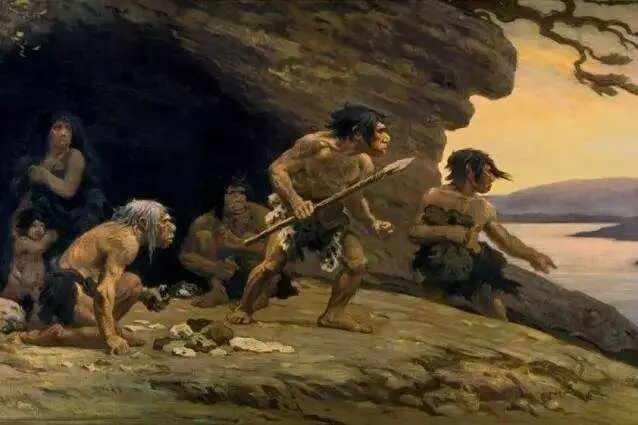
For nearly the next hundred thousand years, our Homo sapiens ancestors roamed Eurasia, grinding through the wilderness, spending skill points, and collecting gear. Along the way, they casually eliminated more of their fellow human species, and life was fairly easy. Before long, however, population pressure forced Homo sapiens to begin expanding across the globe. Remember that Homo sapiens had lived in Eurasia for at least 100,000 years after leaving their African homeland. During that time, Eurasia’s other animals coevolved with them. Early Homo sapiens had only recently undergone the Cognitive Revolution and had not yet gained much experience with cooperation and similar skills, giving Eurasian animals time to prepare. They learned to flee when they encountered humans, or to kill a lone human when they found one. (From a carnivore’s perspective, humans are not especially good eating: they are often thin and carry little edible meat.)
Animals on other continents were not so lucky. Once Homo sapiens had maxed out their experience and equipped themselves with top-tier wilderness gear in Eurasia, they began their first global expansion. About 45,000 years ago, a human tribe set foot on an Australian beach: “Oceania, your emperor has arrived!”
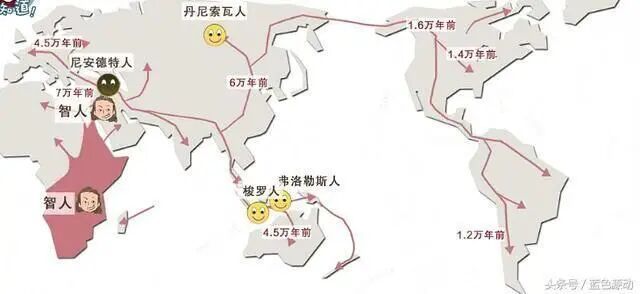
This was an astonishing step, because even the archipelagos closest to Oceania often contain straits more than 100 kilometers wide. The most plausible theory is that Homo sapiens in the Indonesian archipelago developed a seafaring society and used those skills to overcome one obstacle after another on the way to Oceania. Once there, they felt as though they had entered a new game level. They had never seen species like these: giant kangaroos more than two meters tall, marsupial lions crouching in the grass, enormous lizards, and diprotodons weighing as much as two and a half tons. None of these animals feared humans. After all, humans did not look dangerous. They had neither sharp teeth nor claws, and their bodies were not especially large.
Even when humans approached, the animals usually ignored them. Homo sapiens exchanged knowing smiles. Of Oceania’s 24 animal species weighing over 50 kilograms, 23 then disappeared… Countless smaller animals vanished as well. Fire mages burned innumerable trees to the ground, leaving only fire-resistant eucalyptus and, of course, the koalas that ate its leaves.
Homo sapiens were not the sole cause of these extinctions. Climate, the long growth and gestation periods of large animals, and many other factors also played a part. But the MVP was unquestionably Homo sapiens.
 爱发电(点击图片跳转)