
Unity Journal 01
Author: Shenhong
Preface
Hello, everyone. I’m Shenhong; nice to meet you. This is the second entry in my personal Unity journal (the first contains some private material, so I will not be publishing it). It is also the first submission from any member of our current team since we joined the Union. We look forward to getting to know you.
This series is not a development log. It records my experience of learning Unity and the moments that matter to me during game development. Since it is closer to a diary, I will not go too deeply into technical material, and entries will not appear on a fixed schedule. I hope to share the joys and frustrations of one person—and of a whole group—who chose to make games because they love them. I may also introduce parts of the development process along the way. Thank you for making it through all that preamble. Now, on to the main entry. Please excuse my rough writing. (P.S. The concepts below are our development team’s own jargon, not industry terms.)
First, let me introduce the team. There are four of us: TroyBaN (lead design and writing), Shiguang (programming and art), RetenQ (programming), and me (programming).
Why did it take me so long to publish an entry about the 29th? Mostly because I was slacking off. I originally wanted to make it a group effort, but I could not settle on a format and kept putting it off. Before the delay became any more ridiculous, I decided to write it myself.
Journal Entry
This entry tells a story about game design. Our process may not have been conventional, but the experience meant a great deal to me, so I wanted to write it down and share it.
March 29, 2021 marked the start of West II’s fifth-round assessment, which focused on teamwork. TroyBaN and I had worked together in the previous round on a roguelike card game—I handled the programming, and he handled the design. (The legend wrote a 50,000-character design document and spent 5,000 of those characters telling me not to implement saving. Everyone type “macho man” in the chat.) That project, however, came with a fixed assignment and matched an interest we shared, so we decided very quickly what kind of game to make and how to make it. This assessment was different. Multiplayer collaboration was the core requirement, but every other technical direction was simply a way to refine the gameplay. There was no prescribed template, so the choice was ours. Conflict was inevitable: everyone wanted to make their own game, one they had genuinely helped create, rather than labor over requirements handed down by someone else.
The previous weekend, after we settled on making a puzzle game, I wrote an SCP piece (far too informal to publish). Following a brief discussion, I stayed up late to finish the plot outline; I had already written part of it, so it did not take too long. The next day, we spent several hours talking online. It looked as though we were defining the framework, but in reality, each of us was merely describing the game we personally wanted to make. No one but TroyBaN realized it. When he later decided that we should start over from scratch, I was honestly a little disappointed at first.
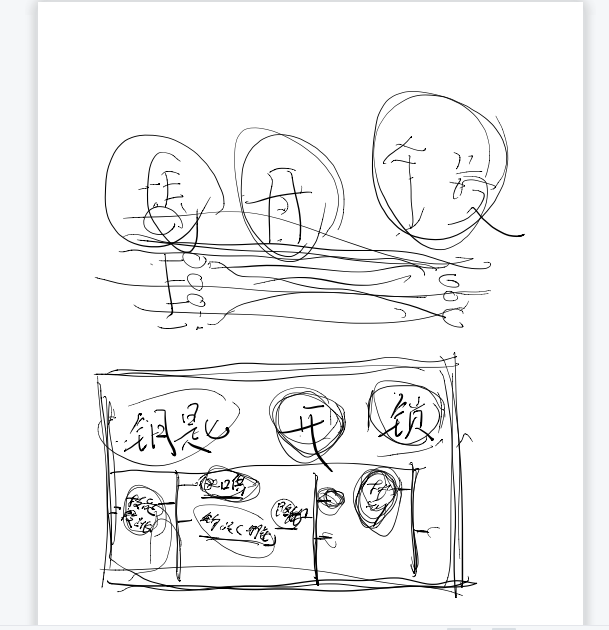
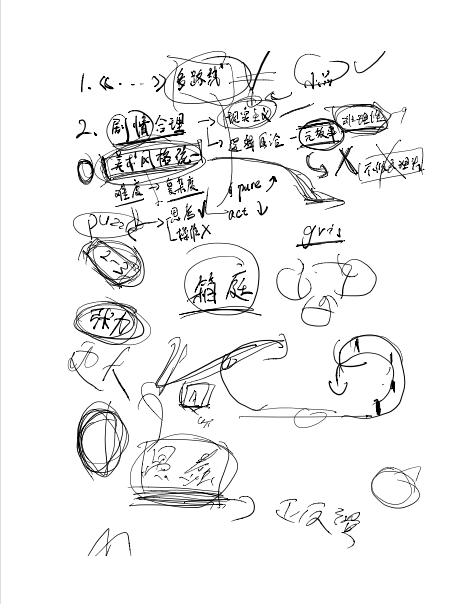
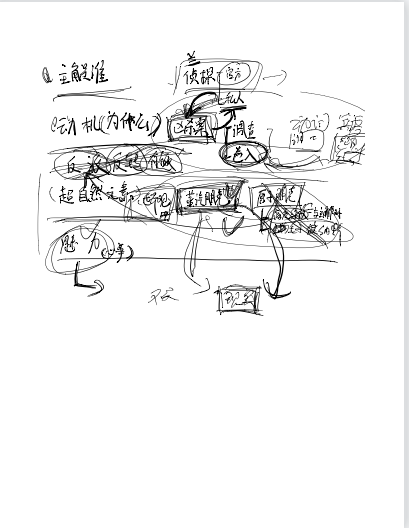
To correct our mistaken approach, TroyBaN called an in-person meeting—a historic occasion for the studio, since it was the first time every member had met face to face. The meeting lasted an hour and a half. From the perspective of a lead designer, TroyBaN thoroughly analyzed three questions: “What is a puzzle?”, “How do we solve one?”, and “Why do we solve it?” He laid out a complete conceptual framework and encouraged us to brainstorm. Everyone took part enthusiastically and spoke freely. Nearly all the suggestions were highly constructive, and we adopted them. By the end, we had broadly settled the game’s three main dimensions—mechanics, story, and format—and answered both what kind of game we would make and how we should make it. The meeting was an enormous success, and I learned a great deal. For the first time, I saw how a designer analyzes a problem and resolves conflict. I also saw how an organizer can help everyone join a discussion without reservation and contribute their own ideas to a game that belongs to the whole team.
Main Entry
A Brief Account of the Meeting
(Most of this material comes from TroyBaN’s presentation; I have included only the key points.)
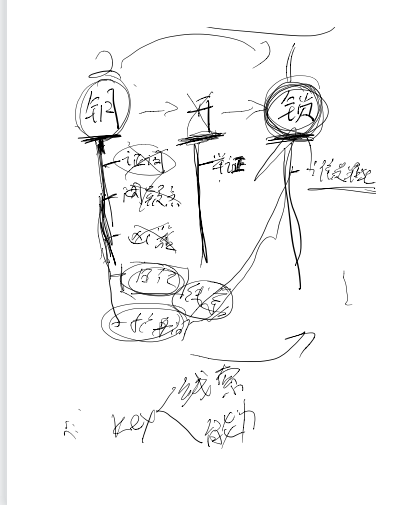
First, what is puzzle-solving? At heart, it is “the process of opening a lock with a key.” That process has three elements: the “lock,” the “key,” and the act of “opening.” In a puzzle game, the lock is the problem the player must solve; the key is the means of solving it; and opening is the method by which the player applies the key to the problem. In Ace Attorney, for example, the lock is the case as a whole, the keys are the testimony and clues the player uncovers, and opening is the step-by-step process of exposing the other side’s nonsense and reconstructing the truth. Revealing the final truth and winning the argument provide the feedback for opening the lock.
Once we understood those three elements, we moved to the next question: what kind of puzzle game did we want to design? After a round of brainstorming, we reached a conclusion. We wanted a game with multiple solutions, action-game (ACT) elements, a coherent story, a consistent visual style, and both dynamic and static puzzles. (Consider that a preview.)
Our first major design question was how to design the keys and locks.
A puzzle game needs a story—or at least a central thread—even if the game itself contains no text. In a simple game with a clear objective, such as Fireboy and Watergirl, the lock is the challenge of reaching the next level.
This led us to the concepts of the “final lock” and the “prime key.” The final lock is the game’s ultimate objective and an essential element of any puzzle game. The prime key guides the player toward discovering the final lock and also plays an important part in opening it. Put simply, it plants foreshadowing. A prime key is not essential to a puzzle game, but it can greatly strengthen the narrative.
The relationship between locks and keys was another focal point. As noted above, we wanted multiple solutions. One lock should therefore open with different keys, and the same key might even open different locks through different processes of “opening.” That called for another round of brainstorming.
Since the game included ACT elements, we decided to be bold. We would design two kinds of locks: “dynamic puzzles” and “static puzzles.” A dynamic puzzle is solved by interacting with the environment; Fireboy and Watergirl offers a useful example. Static puzzles take a more traditional form, as in the Cube Escape series, so I will not elaborate on them here.
In an ACT puzzle game, the keys would consist of both information and abilities. Information needs little explanation; abilities might include double-jumping or seeing through objects, though we have not settled on them yet. This design has two benefits. Gaining a new ability lets the player see the protagonist grow, providing positive feedback. It also creates a wider variety of solutions and greatly increases replayability.
Those were the main ideas behind our game design. The discussion included plenty of other interesting material, but I have left it out because it was not central.
—Afterword—
Everyone involved is a newcomer, a university student who chose game development out of a love for games. We still have a great deal to learn, and we are bound to make mistakes. Whatever happens, we hope for your support and will welcome fair criticism. Above all, thank you for reading this far.
 爱发电(点击图片跳转)