Traditional Chinese Philosophy: A Brief Lecture
Author: Silicon-Based
Reviewer: Xian’e
I drafted this lecture while my school was locked down during the pandemic. I had already reached the library’s borrowing limit, and all the books I had annotated were at my home far away in southern China. I wrote almost entirely from my not especially reliable memory, so this account of traditional Chinese philosophy is bound to contain substantial omissions and mistakes. Please approach it cautiously and critically.
By traditional Chinese philosophy, I generally mean the systems of Chinese thought, sometimes grouped under “Eastern philosophy,” that dominated the intellectual life of East Asia from the Hundred Schools of Thought in pre-Qin China until Marxism entered the country. Compared with its counterpart, “Western philosophy,” traditional Chinese philosophy has many distinctive features. It gives greater weight to moral injunctions and social forms than to the systems and methods of natural science; emphasizes unity over particularity; values people over things; accepts the real existence of a supreme order and seeks harmony between human beings and the external world; and shows a strong tendency toward elementary dialectical thought. More than a thousand years of practice under feudal society shaped what we now call the “spirit of the Chinese nation” and left modern China with immense cultural inertia. Studying this tradition can help readers understand China’s present intellectual landscape and trace contemporary social and cultural phenomena to their roots.
Traditional Chinese philosophy first took recognizable form in the pre-Qin era, during the Hundred Schools of Thought. Before then, ancient China had a primitive philosophy made up of early beliefs and moral ideas: the seed from which the later tradition grew. As the productive forces developed, the slaveholding relations of production under the Xia, Shang, and Zhou dynasties, along with their political and cultural superstructure, reached the limits those forces imposed. More advanced feudal relations of production called for more centralized authority. The result was the prolonged and frequent warfare of the Spring and Autumn and Warring States periods, which destabilized society and badly damaged production. In that turbulent age, advanced thinkers reflected on the sparse philosophy of the Xia, Shang, and Zhou, systematized it, and developed it into many outstanding schools of thought.
Among the landowning ruling class, perceptive rulers in different regions recognized that the unsystematic ideas inherited from the past could no longer meet the demands of government, development, and the struggle for supremacy. Confucianism, Legalism, the School of Military Strategy, and the School of Diplomacy supplied political philosophies suited to those demands and formed communities of shared interest with the ruling class. At this stage, each side supported the other and helped it advance.
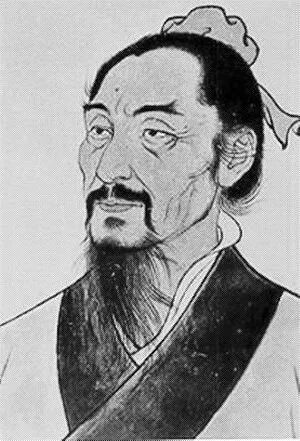
For ordinary people, social upheaval dealt a severe blow to both production and daily life. Their straightforward desire for solidarity combined with their advanced productive forces and, under the leadership of the brilliant Mozi, produced an organized, disciplined, and united proto-political collective: the Mohist school. Meanwhile, the desire of peasants and rulers alike to restore production, together with advances in agriculture, gave rise to the technically oriented philosophy of the Agriculturalist school.
Because Mohism and Agriculturalism answered concrete needs created by the development of the productive forces, they produced early forms of technology and science. Then there was Daoism… Childlike ideals inherited from primitive morality collided with the harsh reality of social turmoil, leaving Laozi, a minor official, with a profound spiritual void. He felt both the desire to “withdraw from the world” and the ideal of “engaging with the world.” Out of this contradiction came a remarkably early philosophy with tremendous reach. From the vantage point of the supreme principle, the “Dao,” it built new systems of morality and knowledge. By taking a position beyond its own age, it escaped the immediate moment and found spiritual grounding in the eternal and the vast (“Heaven and earth are not humane; they treat the myriad things as straw dogs”). Zhuangzi later inherited these moral and cognitive systems and used them to build a philosophy of self-exploration and an inner world of freedom. Other schools, including the School of Names, the Yin-Yang School, the School of Minor Talks, and the Miscellaneous School, served different classes and groups. They were less independent: some were absorbed through continued conflict and exchange with larger schools, while others eventually declined into purely technical fields of knowledge. Even so, their independent thinking and defiant posture in debate did much to mature and develop early Chinese philosophy, and their historical contribution was considerable.
By the late Warring States period, hard-line philosophies of rule, chiefly Qin Legalism and military thought, had achieved great success in maintaining stability and contesting supremacy through force and violence. That success led the ruling class, the Legalists, and military strategists to make a serious mistake: they assumed that the philosophy and methods of a period of intense struggle could be applied directly to government and reconstruction once the contest for rule was over. The Qin dynasty accordingly fell after only two emperors. The collapse dealt a severe blow to the School of Military Strategy, which ceased to be an independent philosophical school and became an abstract, technical body of knowledge. The clearest sign of the shift is that later periods had plenty of “generals” but very few “military thinkers.” Legalism, meanwhile, could not satisfy the ruling class’s growing demand for centralized power and was reshaped and absorbed by Han Confucianism. Most other schools met a similar fate, epitomized by the call to “suppress the Hundred Schools and exalt Confucianism alone.” Only Daoism, grounded in a deeper and more expansive supreme order, retained a degree of independence. Even it was driven by political and academic pressure to merge with ancestral worship and develop into an unusual phenomenon in religious history: religious Daoism.
The chaos in which the Hundred Schools of Thought had flourished did not end until Qin unified the country. Through the burning of books and burying of scholars, Qin Shi Huang developed a tool of centralized rule that represented the new relations of production: “unified thought.” After Qin fell, Liu Bang won popular support by rejecting its harsh Legalism in his “Three Rules of Law.” He did not, however, give up the basic principles of “unified thought” and “centralized authority.” Stable government in a country as large and populous as China made them inevitable. Qin’s failure also alerted the ruling class to the disastrous consequences of mistaken ideas and helped prompt Dong Zhongshu’s “suppression of the Hundred Schools” during the reign of Emperor Jing of Han. In practice, the various schools were critically absorbed and recombined into a more complete “New Confucianism.” Confucianism already served the ruling class, and the new synthesis better met its need for centralized power. It retained the basic framework of moral education, benevolent rulers, and mutual care between ruler and people, while incorporating Legalist and Daoist insights that helped stabilize rule. The result was a social order that served the long-term shared interests of the ruling class and Confucian scholars. This successful intellectual transformation sustained the exceptionally long rule of three Han reigns and placed Confucianism at the center of Chinese philosophy for the next thousand years.
Confucianism presupposed a monarchy. Its reforms focused on the ruler, who was expected to practice “benevolent government,” and they held up an ethical model and ideal: the junzi, or “exemplary person.” This ideal was used to teach people a social morality in which “the ruler is a ruler, the minister a minister, the father a father, and the son a son.” The original logic of Confucian government ran as follows: “The ruler practices benevolent government and loves the people; the people will in turn love a benevolent ruler. Moral education and ritual music teach the people, while family ethics arrange social relations and organize production. Initiated from above, this creates a stable top-down society in which everyone occupies the proper place.”
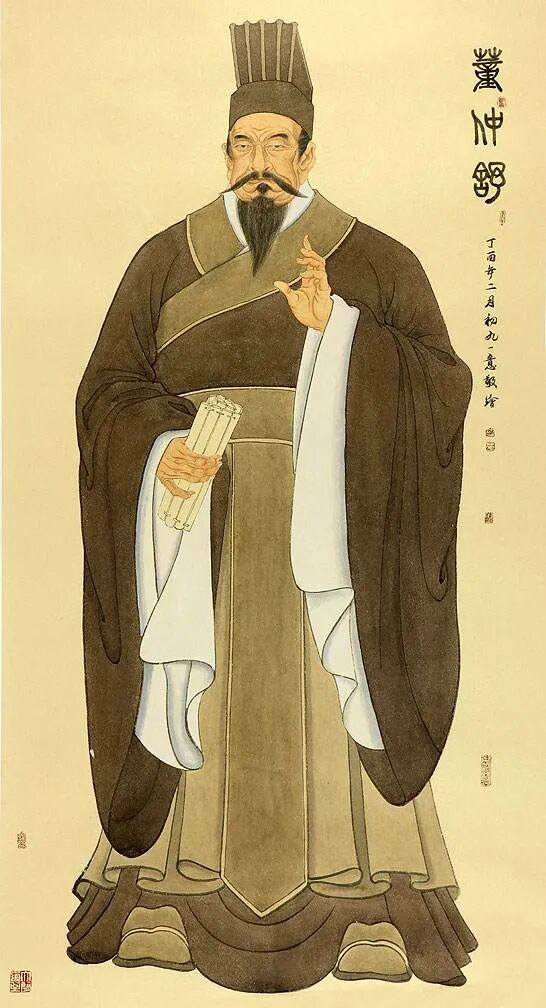
Under Dong Zhongshu’s reforms, Confucianism kept morality at its core while incorporating useful methods and ideas from many other schools. It adopted, for example, the Legalist use of written law to limit a ruler’s power and regulate social customs, as well as the Daoist policy of rest and recovery when production had been badly damaged. This expanded form of Confucianism protected the ruling class’s hold on power more effectively.
Confucianism sought to preserve the stability of feudal society primarily through moral instruction, emotional norms, and ties of blood. When it came to the productive forces and relations of production, however, its outlook went no further than the reactionary and passive policy of “emphasizing agriculture and suppressing commerce.” This was an inevitable limitation.
Because Confucianism made “emphasizing agriculture and suppressing commerce” an important principle of rule, China’s bourgeois class developed extremely slowly. The broader structure of philosophical thought remained at the level of feudal society for a long time, with no major breakthroughs. During the Wei, Jin, and Northern and Southern dynasties, scholar-officials faced political darkness and social turmoil by turning to Daoism for spiritual support. Out of this turn came the Wei-Jin school of xuanxue, or “arcane learning.” More generally, the pattern was Confucianism in orderly times and Daoism in troubled ones.
By the Tang dynasty, rulers continued to support the Buddhist thought that had developed since the Northern and Southern dynasties. Buddhism flourished, adding a distinctive and powerful new current to the old contest between Confucianism and Daoism. The Tang commercial economy grew, politics remained stable, and its rulers were clear-minded; government and culture prospered as a result. China was then a global center of culture, where innumerable ideas and religions met in the East. Chang’an even housed a Zoroastrian fire temple, which gives some sense of the era’s cultural splendor.
In this age of cultural exchange, Chinese philosophy reached a turning point. Material life was growing richer, and a bourgeois class was beginning to emerge; under the pressure of the times, new ideas collided and took shape. Through the successive periods of turmoil from the Southern dynasties to the Sui and early Tang, Buddhism’s transcendent worldview of rebirth, reincarnation, and the gathering and dispersal of karmic conditions offered comfort amid real hardship. Its beautiful picture of the afterlife won followers who were suffering in the present. Rulers differed sharply in their attitudes toward Buddhism. Some believed in it, and under them it expanded dramatically, at times producing the spectacle of “one temple, one cooking pot, a hundred monks.” Yet an excessively large religious community did not engage in productive labor. This held society back and created a corrupt alliance of religion and politics. Other rulers recognized Buddhism’s drawbacks or followed a traditional reverence for antiquity and rejection of foreign influences. They launched campaigns to “eradicate” or “ban” Buddhism, repeatedly forcing it to submit to political power. Before the Tang, this uneven development gave Buddhism a broad popular base while also compelling it to adapt to China. During Wu Zetian’s reign, the emergence of Huineng, the Sixth Patriarch of Chan, definitively marked the completion of Buddhism’s Sinicization. Buddhism as a religion had also become “Buddhist philosophy.”
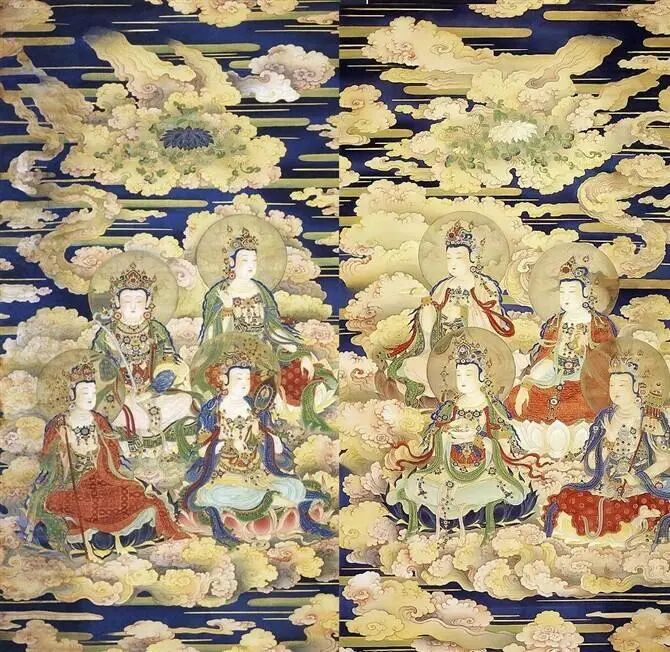
Daoism changed from an intellectual and political force into a religious one. Buddhism followed the opposite path in China. It arrived as a religion, then gradually moved beyond that identity through a difficult process of localization and became an intellectual force within Chinese philosophy. The clearest evidence is that one can read Buddhist scriptures without being a Buddhist, accept and apply their knowledge and wisdom, and find ideas in them that the Confucianism and Daoism of the time did not offer.
Buddhism initially brought China a radically different otherworld. There was no register of gods decreed by Jiang Ziya; instead, anyone could practice and become a Buddha. Nothing in this life was accidental; there was only the necessity of reincarnation. Most importantly, Buddhism placed human suffering and the means of ending it at the center of its thought. Everything, including suffering, was an empty appearance. Material things came together and dispersed according to causes and conditions, while the spirit passed through cycles of reincarnation. Material needs, or desire, were described as the source of all suffering and as meaningless attachments. Buddhist philosophy therefore made “the emptiness of the four elements” its highest aim, while practice meant “breaking attachments” and “breaking through appearances.” Once even “attachment to the self” had been broken, the self itself could cease to exist. One could then enter a transformed state of pure spirit and return to the most innocent, lucid, compassionate, and benevolent condition: “Originally there was not a single thing; where could dust alight?”
The various Buddhist schools differ mainly in how they interpret the scriptures and conduct their practice. Their broader values are consistent.
Buddhism and Daoism are similar in temperament, but they differ in essential ways. However far Daoism withdraws from society and seeks purity and stillness, its central concern remains the problems of this world. What matters most is living freely here and now. It neither defers happiness and prosperity to an illusory otherworld nor denies the existence of the self. Before Buddhism was Sinicized, its faith in the otherworld and the attainment of Buddhahood was unwavering. Records even describe groups of monks meditating on high mountains until they died of hunger and cold. Such practices were wholly at odds with China’s secular traditions.
As Buddhism became Sinicized, it therefore grew less religious and more secular. The famous story of Wang Yangming “persuading an old monk to return to lay life” reflects this process. We may struggle to understand the existence of “Buddhist extremists” in India today precisely because the Buddhism familiar to us has long been Sinicized and secularized. Comparing it with the Esoteric tradition of Tibetan Buddhism, which developed in relative isolation from the culture of the Central Plains, supports the same conclusion.
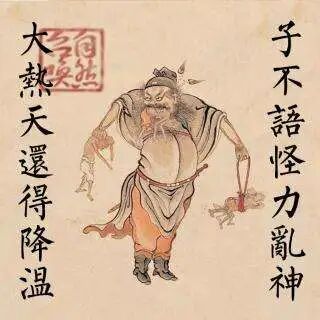
Traditional Chinese Confucian and Daoist philosophy is ultimately concerned with this world. “The Master did not speak of strange phenomena, feats of strength, disorder, or spirits,” and not one sentence in the Dao De Jing discusses another world, the underworld, or the origins of life and death. These philosophical systems are not inherently religious. Superstition and ancestral worship later produced religious concepts such as the “underworld,” “Lingxiao Palace,” “Supreme Lord Lao,” and the “Jade Emperor.” Even these ideas grew out of older forms of worldly moral instruction. Like heaven and hell in the West, they were intended to regulate behavior in this life. Consequently, Confucian and Daoist philosophy could not offer scientific explanations for certain basic questions, such as the “origin of the spirit” or the “essence of human beings.” They either avoided such questions or resorted to mystery. To understand Chinese philosophy properly, we must separate out its religious elements when examining its actual ideas, yet include those elements when considering the limits of its thought.
The arrival and Sinicization of Buddhist philosophy therefore addressed transcendent questions that Confucianism and Daoism had neglected or left unanswered, while also introducing a new set of values. Laozi’s Dao De Jing itself remains rooted in the real-world images of the “ruler,” “people,” “water,” and “infant.” Like Confucianism, it could not escape politics. From their beginnings, both Confucianism and Daoism were closely tied to the ruling class’s needs in government, and the systems they formed could not in practice be separated from politics. For the ruling class, both were ultimately forms of learning directed toward political ends, which is why they endured throughout feudal society. Ordinary people had no need for such learning. If they pursued it, they did so to sit examinations and become officials, which still amounted to the ruling class preserving itself.
Buddhist philosophy, by contrast, could separate itself from politics and spread among ordinary people. It addressed spiritual needs regardless of class and used religious means to comfort the population at large. Chan Buddhism in particular taught that one could “see one’s nature and become a Buddha” and relied on “no written words,” greatly lowering the barrier for ordinary people to study Buddhist thought. Once Sinicized, Buddhism could also provide the social and moral instruction the ruling class needed. By the Tang, a Chinese philosophical system centered on “Confucianism, Buddhism, and Daoism” had begun to take shape. After this round of conflict and integration, and propelled by the developmental needs of the bourgeoisie, Chinese philosophy was ready to enter a new stage.
During the Song and Ming dynasties, Zhou Dunyi, Zhu Xi, the Cheng brothers, and the Lu-Wang school moved Confucian-centered Chinese philosophy forward considerably. Confucianism developed in two broad directions during this period. One was a further extension of the highly systematized union of scholarship and politics: Cheng-Zhu Neo-Confucianism. The other combined Buddhist and Daoist ideas and brought philosophy back to the people: the Lu-Wang School of Mind.
Traditional Chinese philosophy was essentially mature by this stage. The philosophy developed by Huang Zongxi and others who represented new bourgeois currents had taken on certain modern features, including political ideas such as “democratic demands” and the “free market.” Its basic methods remained within the bounds of traditional Chinese philosophy, an inevitable limitation, although the thought itself did move beyond the conventional system. My knowledge is too limited for me to reach a sound conclusion, so I will leave the subject there.
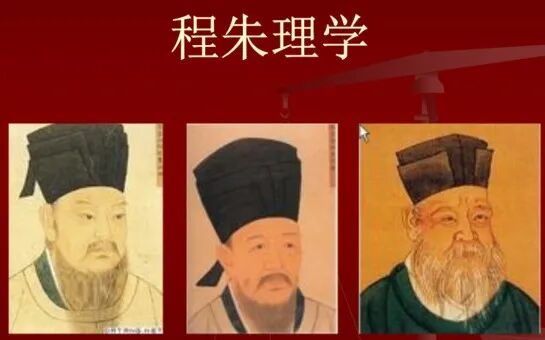
The central figures of Cheng-Zhu Neo-Confucianism were the Cheng brothers and Zhu Xi. They carried forward earlier Confucian learning and emphasized “orthodoxy.” Academic opinion of the school is relatively low today, but to the ruling class it was an almost ideal instrument of ideological control. It represented a nearly perfected form that emerged as intellectuals and the ruling class adapted to one another within a community of shared interests. The Neo-Confucianism reshaped by these three thinkers advocated “preserving heavenly principle and extinguishing human desires,” pushing moral discipline to an extreme. The results included the oppression of women through such ideals as the so-called “chaste martyrs” and “chastity arches,” as well as horrifying stories such as “Guo Ju Buries His Son” in The Twenty-Four Filial Exemplars. Zhu Xi’s Collected Commentaries on the Four Classics also allowed “revering the ancient and rejecting the new” and strained interpretation to flourish in later ages. This was probably why Li Zongwu once concluded: “Western learning was simple at first and then grew increasingly rigorous and complete; Chinese learning began at an extremely high level and then became progressively worse.” Although Neo-Confucian scholars controlled moral judgment, the scholar-official class itself often lived dissolutely, until its halls eventually filled with hypocrites. The Cheng brothers and Zhu Xi were accomplished moral thinkers and scholars. Yet the survival and development of their intellectual synthesis ultimately depended on its alliance of interests with the ruling bloc, and an autocratic feudal monarchy was bound to become corrupt. No number of great Cheng-Zhu scholars could save it.
The Lu-Wang School of Mind, especially Wang Yangming’s thought, can be called Confucianism’s final high point. It truly absorbed the best ideas of Buddhist philosophy and Daoism, although Wang himself denied doing so, and brought a Confucianism that appealed to the “Way of Heaven” back to human beings, the human mind, and subjective agency. Here, “human beings” meant not only the scholar-official class but every person in the fullest sense. Emperors, kings, generals, and ministers had to study Cheng-Zhu Neo-Confucianism, yet they found it tiresome. It was a body of thought distorted by the alliance between Neo-Confucianism and imperial power. It alienated people by stripping human life of its value and assigning that value to an elusive “Way of Heaven”: for the sake of that Way, your life counted for nothing. Wang Yangming, however, proposed that “the mind is principle.” Heavenly principle was not an abstract, external, eternal object in some other realm that only a handful of sages could master. It existed in the “mind” of everyone, from emperors and generals to porters and common laborers. Morality arose from the human mind. It was neither external nor dictated by sages; it belonged to you. This was a Confucian philosophy for the people. It still revolved around the central ideas of “morality” and “benevolence,” but its character had changed fundamentally. First, “the mind is principle,” like “seeing one’s nature and becoming a Buddha,” greatly lowered the barrier to entry. It genuinely addressed ordinary people’s desire to learn instead of being kept out of reach and serving only the ruling class. This explains the esteem and warm welcome Wang received among the people of his time. Second, “the mind is principle” did away with an external and abstract “Way of Heaven.” What remained was morality arising from within. There was no “Way of Heaven” apart from concrete human beings and no external Other that could impose such a Way on you; the “Way of Heaven” was in your own mind. This restored to human beings the meaning that the Way had taken from them. It emphasized subjective agency and the effect of individual will on collective will. In this sense, Wang Yangming’s breakthrough somewhat resembled Marx’s dialectical transcendence of Feuerbach. Yet traditional Chinese philosophy, centered on Confucianism, had long depended on a scholar-official class that did not engage in production. Its ideas were never made precise through practice and scientific expression, and it never developed a rigorous scientific methodology. In the end, what separated it from Marx was its lack of scientific rigor.
In the Qing dynasty that followed, centralization reached its height and brought even tighter control from the center. Literary inquisitions and restrictions on thought nearly halted the development of Chinese philosophy, while selecting officials through the “eight-legged essay” uprooted any basis for traditional philosophy to develop under the Qing. Only when the rumble of modern artillery drew near and Western ideas gradually entered China did the country’s intellectual world begin another round of breakthroughs. By then, however, it had moved beyond the domain of traditional philosophy.
The seeds of ancient, primitive morality were scattered across China. As the climate warmed and rain grew plentiful, the Hundred Schools of Thought sprouted everywhere. After a long and fierce struggle, only two trees, Confucianism and Daoism, grew tall. Confucianism claimed the richest soil and water. It flourished, tall and luxuriant, though its wood was soft. Defiant Daoism grew from bare rock at the edge of a cliff. It was neither tall nor thick, and its leaves were sparse, but it was hard and resilient. For thousands of years, the seasons turned. In fair weather, birds gathered in the Confucian tree; in harsh weather, they huddled in the Daoist one. Then, during a particularly lovely spring, a bird from far away brought a seed called Buddhism. Unlike other short-lived, stunted seeds, Buddhism grew wildly as soon as it took root in the Central Plains. Botanists said that a metabolic waste product neither the Confucian nor the Daoist tree could recycle had accumulated in the soil, and that this waste happened to be ideal fertilizer for Buddhism. To keep Buddhism from overgrowing and taking its ecological niche, Confucianism repeatedly crowded it until its growth was checked. Through conflicts large and small, the three great local trees came to be known collectively as Confucianism, Buddhism, and Daoism. As the soil grew richer and the climate improved, all three kept growing and competing. They discovered that each could learn from the others and take what it needed. Through competition and cooperation, the three trees grew strong and formed a harmonious ecological relationship. That, in broad outline, is how the community called “traditional Chinese philosophy” evolved.
[End of Part One: A Historical Overview of Traditional Philosophy]
 爱发电(点击图片跳转)