








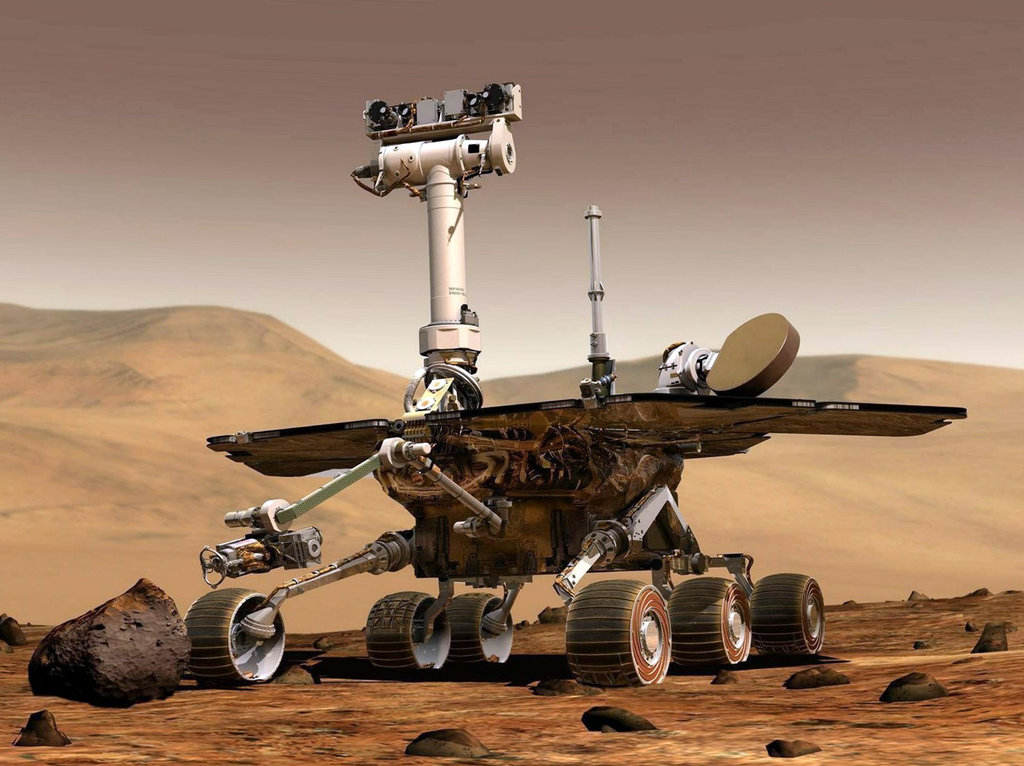
Farewell, Opportunity: Remembering a Mars Exploration Pioneer
Author: A Millisecond of Eternity A record-setting NASA mission on Mars has come to an end. One of the longest-running and most successful feats in interplanetary exploration, the Opportunity rover mission concluded after nearly fifteen years on the Martian surface. Its legacy laid the groundwork for NASA’s return to Mars. In June 2018, a severe planet-wide dust storm blanketed Opportunity’s location on Mars, and the rover stopped communicating with Earth. Engineers at the Space Flight Operations Facility at the Jet Propulsion Laboratory (JPL) sent more than 1,000 recovery commands in an effort to reestablish contact, but none succeeded. The solar-powered rover last communicated on June 10, 2018. NASA Administrator Jim Bridenstine said, “It is because of trailblazing missions such ...
Forget The Wandering Earth: How to Destroy the Planet in Three Elegant Steps
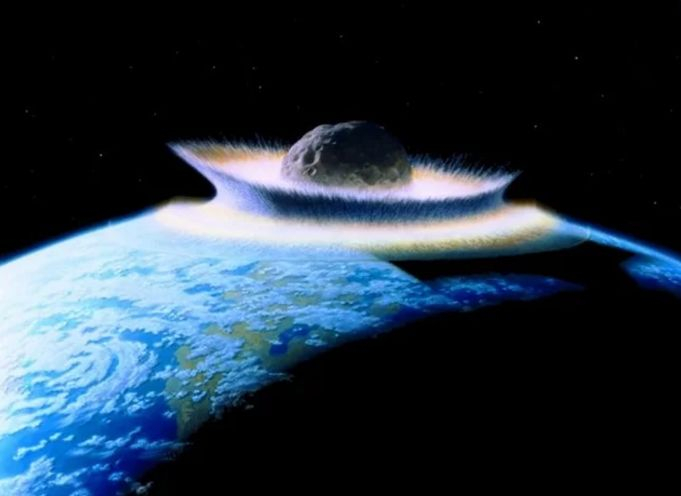
Author: A Millisecond of Eternity Concept art of an asteroid impact | Credit: Don Davis/NASA For years, certain mad scientists have dreamed of holding governments hostage with doomsday plans, all in pursuit of wealth, power, fame, and a suitably terrified public. In The Wandering Earth, meanwhile, humanity takes the whole planet—and all its hopes—on a journey through the universe. But today is not about making Earth wander. We are going in the opposite direction: how might one destroy it, simply and elegantly? Destroying Earth is not easy. Sure, you could end human civilization, wipe out every higher life form with a super-plague, or invent nanomachines programmed to erase the entire biosphere. Yet in every case, the ground beneath our feet would survive and keep circling the Sun fo ...

The Wandering Earth: A Brief Film Review
Author: 观复·钧天 I usually prefer peace and quiet, so even sitting in a theater for a pulse-pounding science-fiction movie is a rare experience for me. Big-budget science fiction has long seemed to belong to Hollywood, and saving Earth is one of the genre’s familiar themes. I never expected China’s first homegrown science-fiction blockbuster to be this good: its logic holds up, and the story feels reasonably complete. Much of the credit must go first to the excellent framework provided by Liu Cixin’s novel. Once humanity begins to see itself as the master of this planet, one problem follows another. People killing one another is only the most immediate. Species extinction and humanity’s domination of the biosphere run deeper. Only when the planet we depend on can no longer support us d ...
Gaia Reveals How Dead Sun-Like Stars Crystallize
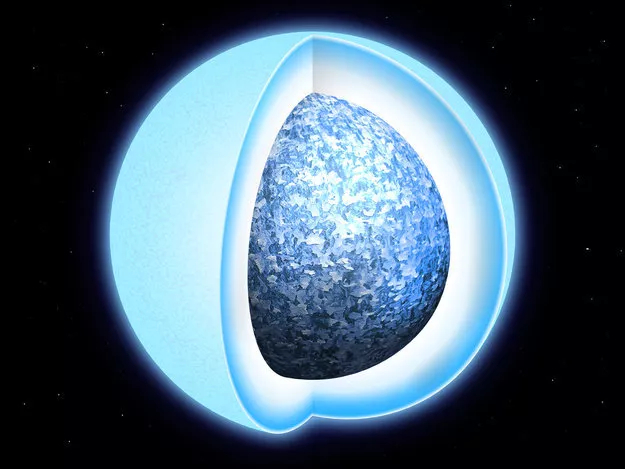
Author: A Millisecond of Eternity On January 9, 2019, data from Gaia, the European Space Agency’s Milky Way–mapping spacecraft, revealed for the first time how white dwarfs, the dead remnants of stars like our Sun, crystallize into solid spheres as their hot interiors cool. Scientists predicted the solidification, or crystallization, of matter inside white dwarfs 50 years ago. Only with Gaia, however, have astronomers been able to observe enough white dwarfs precisely enough to see the telltale pattern. “Before Gaia, we had distances for only a few hundred white dwarfs, and many of them were in clusters where they all had the same age,” said Pier-Emmanuel Tremblay of the University of Warwick in the United Kingdom, lead author of the study published in Nature. “With Gaia, we now ha ...
A Stunning Animation of a Solar Flare
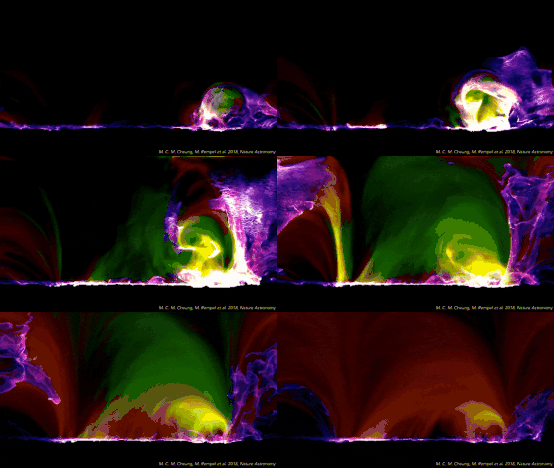
Author: 一毫秒的永恒 In this solar-flare visualization, purple represents plasma cooler than one million kelvins, red represents temperatures between one and ten million kelvins, and green represents temperatures above ten million kelvins. This animated visualization models the life cycle of a solar flare in three dimensions, using different colors to show the temperatures reached during the eruption. The magnetic-field lines dance: first they surge, then erupt, and finally settle down. Beyond producing a striking view of a solar flare, the simulation lays important groundwork for predicting flare activity in space weather. Solar flares are the most powerful explosions in our solar system—and spectacular events to behold. They form near sunspots, the dark patches on the Sun’s surface that ...
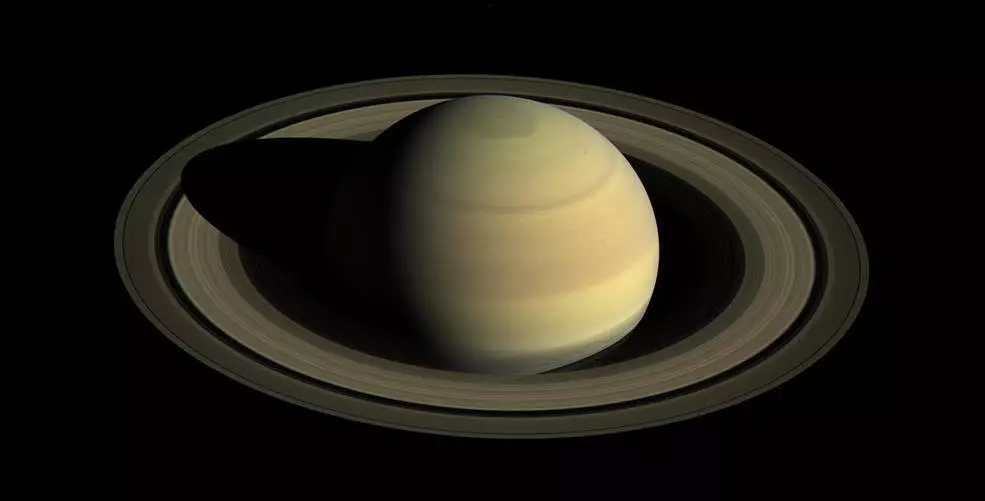
How Long Is a Day on Saturn? Scientists Finally Have a Precise Answer
Author: A Millisecond of Eternity NASA's Cassini spacecraft captured this view of Saturn's northern hemisphere as it approached summer solstice in 2016. A Saturnian year lasts 29 Earth years; according to the latest analysis of Cassini data, a day lasts just 10:33:38. Using new data from NASA’s Cassini spacecraft, researchers believe they have solved a long-standing mystery in solar system science: how long a day lasts on Saturn. The answer is 10 hours, 33 minutes, and 38 seconds. Planetary scientists spent decades trying to pin down that number because the rotating gas giant has no fixed surface to track and its unusual magnetic field masks its rotation rate. As it turns out, the answer was hidden in Saturn’s rings. While Cassini orbited Saturn, its instruments examined the plane ...

A Mathematician's Sense of Beauty: Penrose Tilings
Author: Martin Gardner Translator: Tu Hong Excerpted from Fractals, Take-Away Games, and Penrose Tilings, Shanghai Scientific and Technological Education Publishing House Text and images selected from the WeChat account Fun Mathematics (ID: mathfun) Sir Roger Penrose (1931– ) is a British mathematical physicist known for major work in general relativity and cosmology. He has also contributed to recreational mathematics and philosophy. This article is excerpted from Fractals, Take-Away Games, and Penrose Tilings, a volume in a classic collection of Martin Gardner’s writing on recreational mathematics. In 1957, Scientific American ran my column on periodic tilings of the plane by congruent convex polygons. The piece was later reprinted in Time Travel and Other Mathematical Bewildermen ...
Recent Post