






A Community-Curated Popular Science Reading List for World Book Day 2025
This April, with spring in full swing, we celebrated the 30th World Book Day. Books can be beacons when we venture into the unknown. A-kun’s call for popular science book recommendations brought in a trove of excellent titles, and this is the reading list our community put together. A Brief History of Time Stephen Hawking In accessible language, this book introduces cutting-edge ideas about the origin of the universe and humanity’s fate. From black holes and the Big Bang to time travel, Hawking’s vivid prose guides readers through the mysteries of a vast and astonishing cosmos. Both newcomers to science and readers with some background knowledge can find inspiration here. The book does more than explain scientific facts: it stirs curiosity, invites exploration, and asks us to consider hu ...

Hilbert's Tenth Problem, Part II: The Historical Background
Author: silverxz Proofreader: Shiguang The previous article introduced Hilbert and his 23 problems. The next two articles review the relevant history. This one covers the background needed for the tenth problem: the history of Diophantine equations, algorithms, and computability. The next article turns to the story of how Hilbert’s Tenth Problem was solved. Readers already familiar with this material may skip directly to that installment. Diophantine equations: from Diophantus to Hilbert The story has a classic opening: Once upon a time—or, more precisely, 1,800 years ago—the ancient Greek mathematician Diophantus studied a great many algebraic equations. At the time, that meant equations defined by polynomials with rational coefficients. His work covered many subjects, but one qu ...

Hilbert's Tenth Problem, Part I: Introduction
Author: silverxz People have a peculiar fascination with mathematical conjectures and the stories of how they were solved. Goldbach’s conjecture and Chen Jingrun, Fermat’s Last Theorem and Wiles, the theory of solvability by radicals and the work of Abel and Galois: such examples have found their way into elementary education. Children may not even understand what these problems say, yet they enjoy stories in which a legendary figure resolves a long-standing conjecture, much as they enjoy tales of heroes and dragons. This is probably how Hilbert’s name first reached the wider public: David Hilbert (1862-1943) was the most celebrated mathematician of his era. In 1900, Hilbert assembled 23 mathematical problems that were then unresolved. Some were sharply defined (Problem 8, for exampl ...

HyKGE: Knowledge-Graph-Enhanced RAG for Medical LLMs
Introducing HyKGE This article draws on “HyKGE: A Hypothesis Knowledge Graph Enhanced Framework for Accurate and Reliable Medical LLMs Responses,” by Xinke Jiang, Ruizhe Zhang, Yongxin Xu, Rihong Qiu, and other researchers at Peking University’s School of Computer Science. HyKGE is a recent approach to combining knowledge graphs (KGs) with retrieval-augmented generation (RAG). It pairs the semantic understanding and generative abilities of large language models (LLMs) with the rich, structured information stored in knowledge graphs. The result can make medical-information retrieval more efficient while keeping answers accurate. This work opens another path for medical LLMs and offers useful lessons for applying large language models and knowledge graphs in a wider range of settings. R ...

Uncertainty Quantification with Spatiotemporal Graph Probabilistic Models
Author: Zhang Yixian Reviewer: Shiguang Introduction Spatiotemporal data are complex and diverse. Analyzing them can have a major impact on weather forecasting (as with Huawei’s Pangu model), predictions of geological variation and sunspot activity, traffic-light scheduling, bike-sharing deployment, and many other tasks. Their complexity arises from variation across time and space as well as spatial heterogeneity. Their distributions can also be extreme, with large numbers of zero values and pronounced long tails. This article introduces a method that uses the Tweedie distribution and the zero-inflated negative binomial distribution to capture zero inflation and long-tail effects in complex spatiotemporal data, then combines these distributions with a spatiotemporal graph neural net ...

Chinese Bridges: Modern Architecture and Tradition Reimagined
Author: Zijin Chinese architecture has a long history. Across centuries of change, its traditions have been preserved, developed, and reinvented, reflecting the ingenuity of the Chinese people. As modernization advances, Chinese architects are finding new ways to combine traditional cultural elements with contemporary design. Rapid technological development and urbanization have made this connection with tradition an increasingly important part of architectural practice. Bridges connect opposite banks and are an essential part of transportation infrastructure. Beyond their practical role in modern society, they also hold an important place in China’s architectural tradition. In ancient China, bridges were treated as cultural monuments, as the saying “A temple may stand for a thousand ...
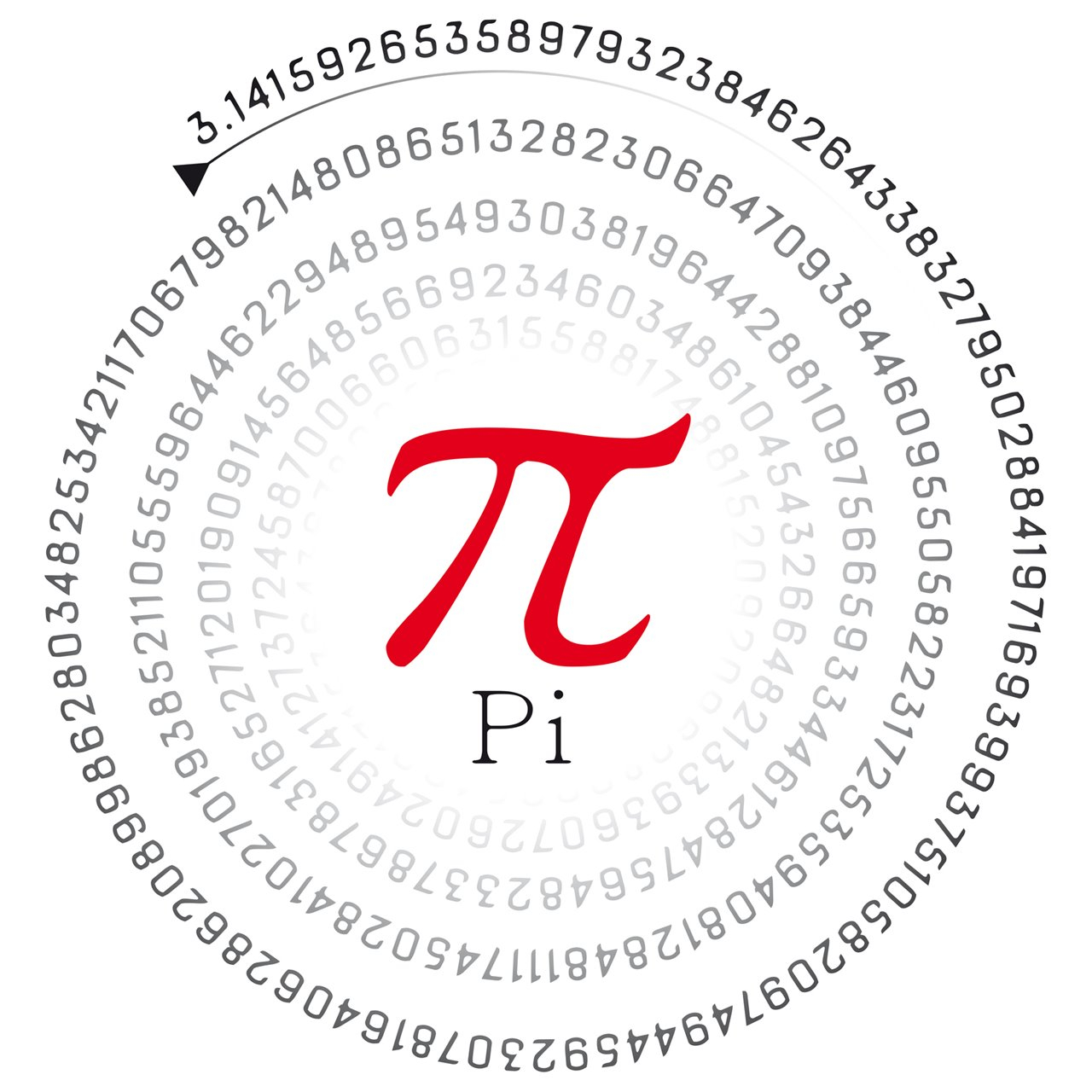
Does Pi Always Equal 3.14…?
Author: ΔδDelta\Delta\delta DeltaΔδDelta Reviewer: Baiyan Years ago, a science fiction story titled “Pythagoras: 2.013” took the internet by storm, and people still remember it today. One passage near the end invites the reader to speculate: “Do not judge their intelligence from our point of view. Perhaps our own civilization, too, exists within some larger region of distorted spacetime. Don’t you find the value of pi, 3.1416, an exceedingly strange number?” The story has plenty of flaws, but they do not diminish its literary value. It genuinely inspired many people to study science and mathematics. Even today, it offers a useful starting point for a short exploration of the value of pi. So let us return to that evocative line: is pi, π=3.1415926…\pi = 3.1415926 \dotsπ=3.1415926… ...
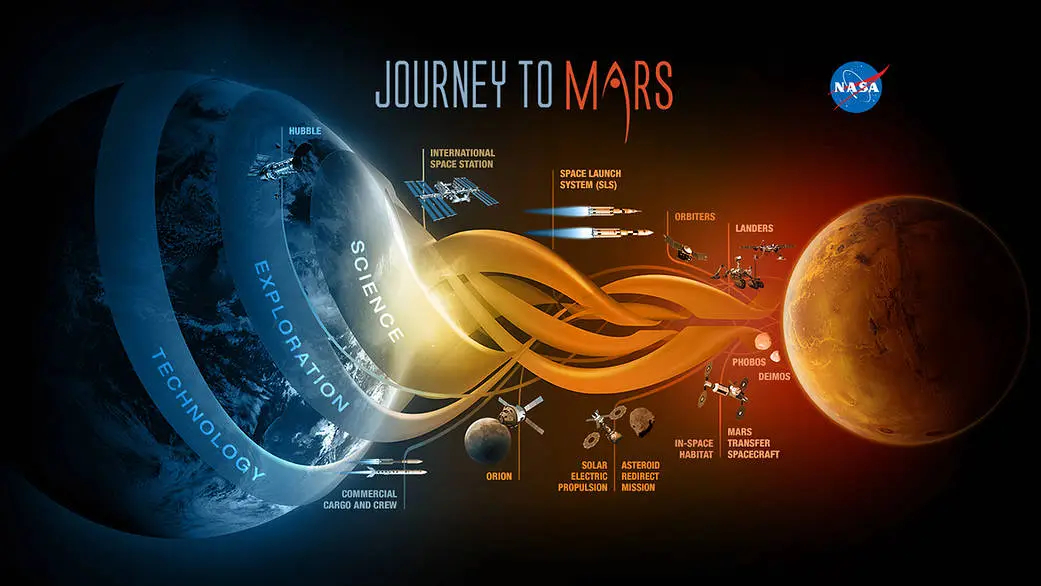
How Do We Send Spacecraft to Other Planets? A Brief Guide to Motion and Orbits
Author: 丛雨 Reviewer: 时光 How many steps does it take to send a probe to Mars? In general, a probe’s journey from Earth to another planet can be divided into three stages: the rocket launches and enters Earth orbit; the spacecraft accelerates onto a new trajectory, escapes Earth’s gravity, and travels toward the target planet; and, after arrival, it either enters orbit around that planet or lands on it. The first and third stages are brief but involve many intricate steps and details, while the second occupies most of the journey. Beginning with spacecraft motion and orbital trajectories, this article introduces some basic ideas about celestial motion and orbital maneuvers. The Three Cosmic Velocities Let us begin with spacecraft speed. As everyone knows, the faster an object is thrown ho ...

How to Build a Personal Blog or Résumé Site Without Code
Author: Thinker Reviewer: I Would you like a blog or résumé site of your own? A personal corner of the internet gives you room to experiment and build something that is entirely yours. This guide shows complete beginners how to set one up quickly and easily, without writing code. Create a GitHub account GitHub is an open-source code-hosting platform where people share and manage projects. If you do not have an account yet, follow the steps below. Otherwise, skip to the next section. How do I sign up for GitHub? Open the GitHub website Open a browser and go to https://github.com/. Complete the registration form On the GitHub home page, click “Sign up” in the upper-right corner. Enter a username, an email address, and a password. Use a valid email address because GitHub will ask you to ...
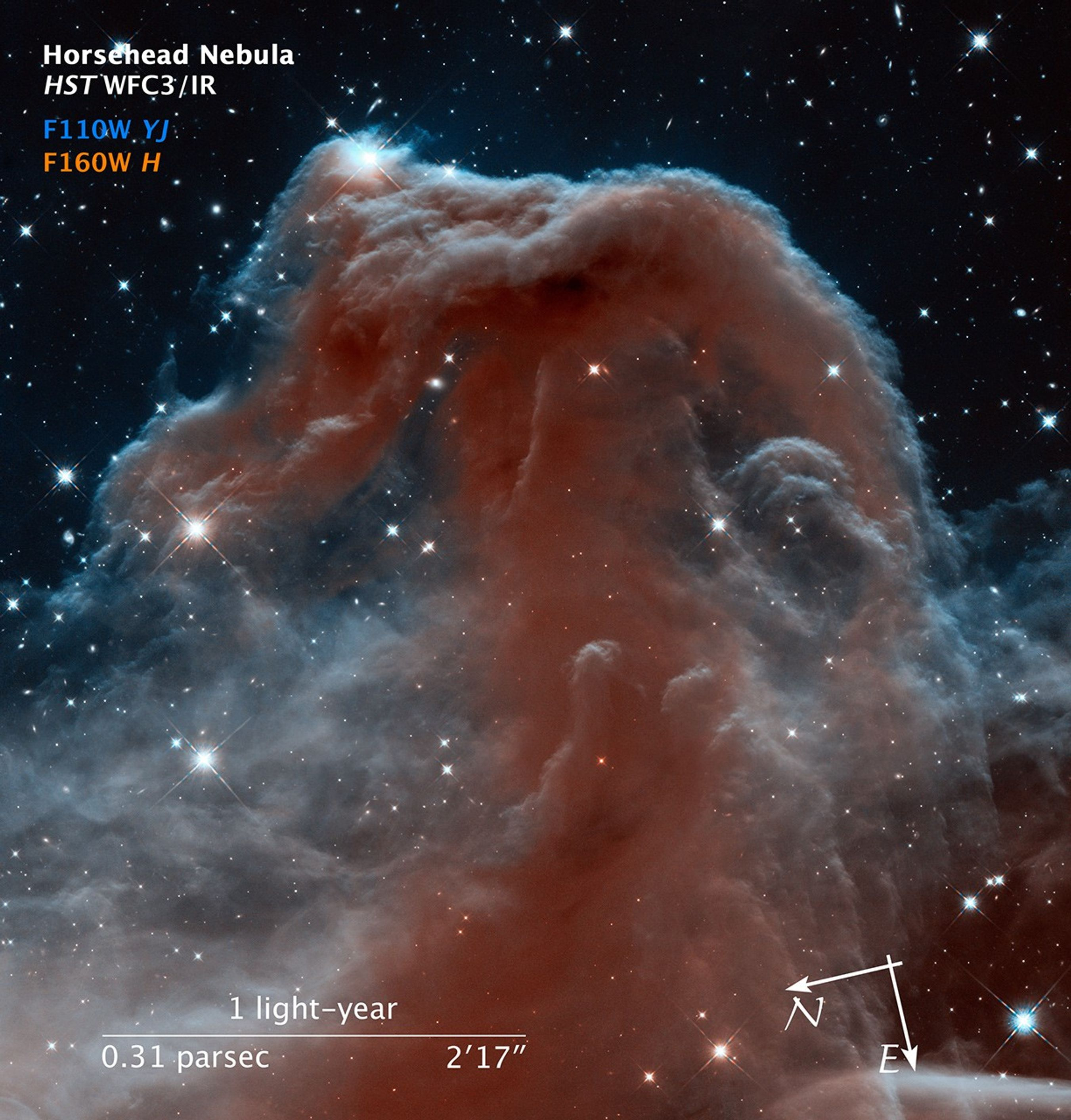
What Is the Interstellar Medium?
What Is the Interstellar Medium? Author: Li Xiaobai Reviewer: Shiguang Introduction Our universe contains more than stars and planets. Interstellar space is permeated by matter of extremely low density, far thinner than the best vacuum we can create on Earth. This material, known as the interstellar medium, fills the vast reaches between planetary systems. The Interstellar Medium The interstellar medium consists mainly of gas and dust. In most cases, the elemental abundances in interstellar gas resemble those of other celestial objects. About 90% or more of the gas consists of hydrogen atoms or molecules, roughly 9% is helium, and the remainder is made up of heavy elements. Interstellar dust is less well understood. Infrared observations suggest that it contains silicates, graphite, i ...
Recent Post